
Understanding Your New LVE Bill & Demand charges
Beginning with October 2026 bills, Lower Valley Energy members will see a demand charge for the first time. LVE's board approved the new rate structure in July to better align the cost of providing electric service with how members use the system. The effect on any one household will depend on how that household uses electricity.
Energy and demand are not the same thing
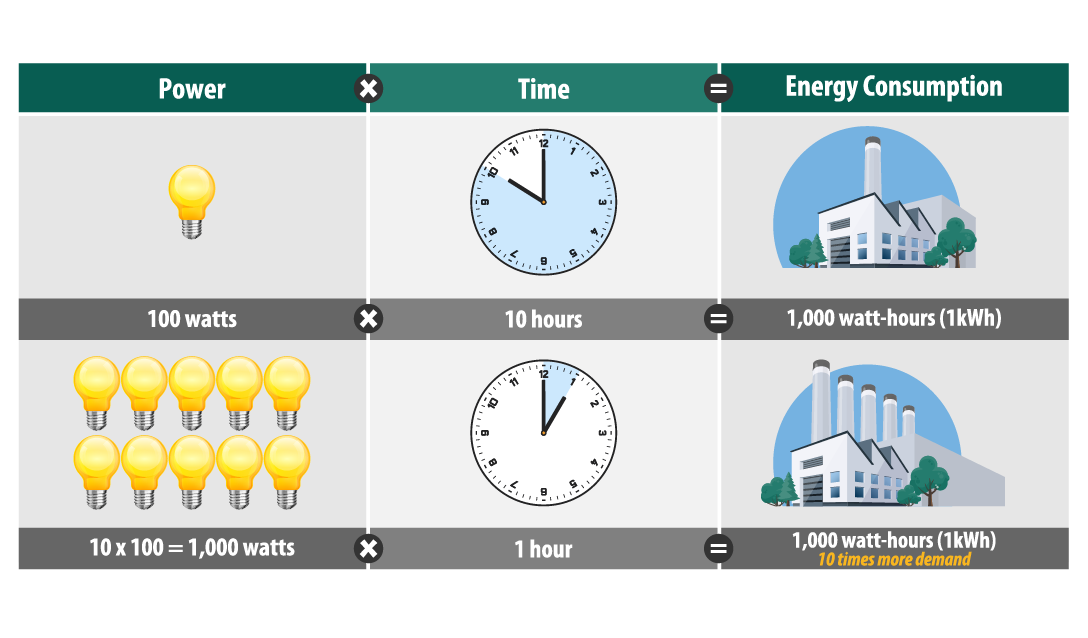
Your bill has traditionally reflected energy use, measured in kilowatt-hours. Demand measures how much power you draw at a single moment, in kilowatts. The new charge is based on your highest 15-minute period of use in a billing cycle.
LVE offers a simple comparison. One 100-watt bulb running for ten hours uses 1 kWh and creates 0.1 kW of demand. Ten bulbs running for one hour also use 1 kWh, but they create 1 kW of demand because they are on at the same time. The energy is the same, but the strain on the system is not.
What changes for residential members
The energy charge stays at $0.062 per kWh. A new demand charge of $1.00 per kW is added. The monthly base charge is now tiered by your highest demand over the past twelve months, and LVE expects many members to see a lower base charge.
Managing your peak
Because the charge reflects your single highest period, the most effective step is to avoid running several large appliances at once. Cooking, running the dishwasher, and drying laundry at the same time will raise your peak. Spacing them out will lower it. LVE estimates that difference at about $7 per month in its example. Electric vehicle chargers, water heaters, and hot tubs tend to have the largest impact.
Where ECW can help
Peak demand is a topic we want to help our community understand. If your bill is rising, our staff can review your energy use with you, identify what is driving your peaks, and help you plan efficiency projects. Our residential loan program can also help finance upgrades that reduce your costs.
LVE has published useful tools: an explanation of the new rate structure, a bill estimation calculator, and short videos on demand and SmartHub.
To talk with our team, visit energyconservationworks.org.